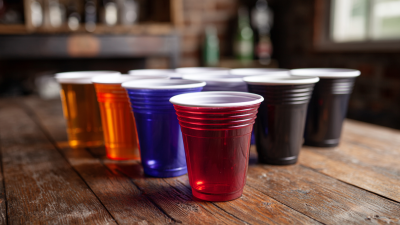
How to Find Beer Pong Cups Near Me for Bulk Buying?
Finding Beer Pong Cups Near Me can make event planning easier, especially when you need several hundred cups quickly. Local stores may offer better pickup options than distant online suppliers. However, nearby does not always mean cheaper. Compare unit prices, package counts, taxes, and delivery fees before placing a large order.
Start with local party-supply shops, restaurant-supply stores, warehouse retailers, and reputable online marketplaces with location filters. Call ahead and ask about current inventory. A website may show availability, but the shelf could be empty by arrival. Check cup capacity, dimensions, color consistency, and material details. For drinks, choose products clearly labeled for food contact and suitable for the intended use. Avoid buying cartons with damaged packaging, unclear quantities, or missing supplier information.
Measure your table space, too. Some cups look standard but have wider rims or different bases, which can affect game setup. For a medium gathering, calculate cups for play, replacements, spills, and serving needs. Ordering a small sample first is wise.
It can prevent an expensive mistake.
Ask whether bulk discounts begin at specific quantities. Confirm return policies, pickup windows, and whether mixed colors count toward the discount. Reviews can reveal useful details, but they are not perfect evidence. I have found that real stock confirmation often matters more than polished product photos. A reliable seller should answer clearly and provide consistent product information. That small check can protect your budget, schedule, and guests’ experience.
Understanding Bulk Beer Pong Cup Requirements
How to Find Beer Pong Cups Near Me for Bulk Buying?
Understanding Bulk Beer Pong Cup Requirements
Bulk buying starts with accurate event planning, not the lowest shelf price. Estimate cups by table, round, and guest count. A practical guide is 20 to 30 cups per active table for one session. Add 10% for spills, damage, and unexpected guests. I still over-order sometimes. That mistake is cheaper than stopping mid-event.
Cup size matters. Common party cups hold about 16 ounces, while smaller options reduce liquid use and storage weight. Check rim diameter, wall thickness, and stacking height before ordering. A 2024 Grand View Research report valued the global disposable tableware market at over 40 billion dollars. Its findings reflect strong demand for convenient single-use products. They also highlight growing interest in material efficiency and waste reduction.
Search nearby restaurant-supply warehouses, cash-and-carry stores, and local distributors. Ask about case quantities, delivery time, and sample availability. Inspect ten cups from each sample sleeve. Look for uneven rims, weak bases, and inconsistent sizing. These details can disrupt ball movement and table setup. Compare the delivered cost, not only the listed price. Include transport, storage space, and unused inventory. The U.S. Environmental Protection Agency reports that containers and packaging represent a major share of municipal waste. Reusable practice cups or responsible disposal planning may reduce the event’s footprint. Local availability can also prevent rushed purchases and unnecessary shipping.
How to Find Beer Pong Cups Near Me for Bulk Buying?
Understanding bulk beer pong cup requirements helps estimate how many cups to purchase for different event sizes. The chart assumes a standard setup of 10 cups per side, or 20 cups per table, with one table serving approximately 20 guests.
Planning guideline: For regular events, consider adding 15%–20% extra cups for replacements, spills, and additional rounds. For example, a 100-guest event may require about 120 cups for five simultaneous tables, before adding a replacement reserve.
Searching Local Stores and Online Suppliers Nearby
When searching for beer pong cups nearby, start with local party stores, restaurant-supply shops, and warehouse outlets. Call before driving. Ask about case quantity, cup dimensions, color availability, and same-day pickup. A counter display may show retail packs, not bulk inventory. Bring a tape measure and inspect the rim, base, and plastic thickness. This practical check matters when tables hold many cups and refills happen quickly. The National Restaurant Association’s 2024 State of the Restaurant Industry report projected U.S. foodservice sales near one trillion dollars. That scale suggests steady demand, but it does not guarantee local stock.
For online suppliers near you, filter by delivery ZIP code and warehouse location. Compare the delivered cost per cup, not only the carton price. The U.S. Census Bureau reported 2024 e-commerce sales of 1.1926 trillion dollars. That represented 16.1% of total retail sales. This growth makes online sourcing useful for unusual colors or larger cases. Still, delivery estimates can shift during holidays. Request a sample, material specification, case dimensions, and return terms before placing a large order. Local pickup may cost slightly more, yet it reduces waiting and freight surprises.
For dependable buying, record response time and stock confirmation. Food-contact suitability should be documented, not assumed from a product photo. I would test ten cups with water before ordering hundreds. It is a small test. My weak point is trusting attractive pricing too quickly; shipping can erase the discount. A simple spreadsheet can compare pickup time, usable quantity, defects, and total cost.
Choosing a Reliable Seller and Placing a Bulk Order
Finding beer pong cups near me is easy; finding a dependable bulk seller requires more care. Search local wholesalers, restaurant-supply stores, and warehouse distributors first. Request a physical sample before ordering several cases. Check rim smoothness, cup wall thickness, stacking quality, and resistance to bending. A seller should provide clear dimensions, material details, carton counts, delivery dates, and a written return policy. Vague answers are a warning sign.
The U.S. Environmental Protection Agency reported that plastic containers and packaging generated about 14.5 million tons of waste in 2018, with only roughly 14.6% recycled. That data makes material selection worth discussing, not ignoring. Ask whether cups are recyclable in your local system, and avoid unsupported “eco-friendly” claims. If compostable cups are advertised, request certification details and relevant testing standards, such as ASTM D6400 where applicable. Food-contact documentation should also be available.
My own ordering mistake was trusting a low unit price without checking carton dimensions.
Freight costs erased the savings. Ask for a delivered quote, not only a product price. Confirm whether samples match production stock. Small details matter. Keep one sealed carton for inspection when it arrives. Bulk orders can expose uneven rims, crushed packaging, or color differences that a sample misses. I would also order slightly fewer cups than the first estimate, because event attendance predictions are rarely perfect. Reconsider the quantity after confirming venue capacity and storage space.